
“As an Amazon Associate, I earn from qualifying purchases.”
I didn’t plan on upgrading anything in my home. Most of these changes happened by accident, one small annoyance at a time. A dark bathroom at night. A slippery floor after the shower. A kitchen counter that always felt slightly off when I was prepping food.
None of it felt “bad enough” to fix at first. I just adapted. Like most people do. But over time, those little compromises started stacking up. And once I fixed one thing, it became obvious how many other small upgrades I’d been ignoring.
What surprised me wasn’t how expensive or complex the solutions were. It was how much calmer daily routines felt once a few practical details were finally handled properly. There’s a funny thing about practical products: most of them don’t look exciting at first glance. They sit quietly in the background, doing their job, until one day you realize your routine would be noticeably worse without them.
That’s the category these items fall into. Not flashy for the sake of it. Just quietly useful, sometimes surprisingly so. Some of them solve problems you didn’t know needed solving. Others simply make daily life feel a little smoother, a little less annoying.
A Small Light That Changes Night-Time Habits
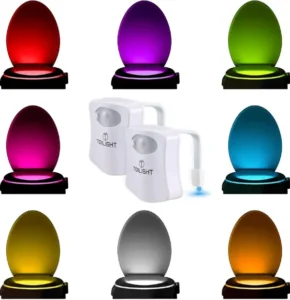
Anyone who’s ever walked into a dark bathroom half-asleep knows the problem. Overhead lights are too harsh, but complete darkness isn’t exactly safe either. That’s where a motion-activated toilet bowl light earns its keep. It turns on automatically when you walk in, gives off just enough glow to see clearly, and turns itself off when you leave. No switches, no thinking, no bright shock to the eyes at 3 a.m.
It’s the kind of product that sounds like a gimmick until you live with it for a week. After that, it just becomes normal. And when guests notice it, it usually gets a laugh before it gets appreciation.
Soft Surfaces Matter More Than You Think
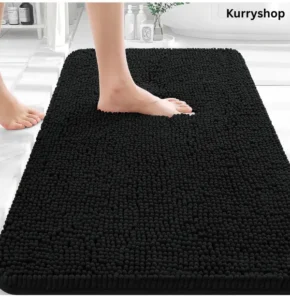
Bathrooms are full of hard materials. Tile, porcelain, metal. Everything does its job, but comfort isn’t always the priority. A thick, absorbent bath rug changes that dynamic instantly. Stepping out of the shower onto something soft instead of cold tile feels like a small upgrade, but those small upgrades add up over time.
The difference is even more noticeable in smaller bathrooms, where every element has to work harder. Quick-drying materials and non-slip backing mean you don’t have to think about it once it’s in place. It just works, day after day.
A quick reality check
Before buying anything new, I started asking myself a few simple questions:
– Do I interact with this space every single day?
– Does it ever slow me down, annoy me, or make me adjust my behavior?
– Would fixing it remove a small irritation instead of adding something new?
– Will this still feel useful a month from now?
That short checklist filtered out a lot of unnecessary purchases.
What remained were upgrades that actually earned their place.
The Cutting Board You Actually Want to Leave Out
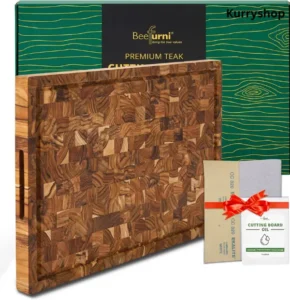
Most cutting boards are purely functional. You use them, wash them, and hide them away. A solid end-grain wooden board is different. It’s heavy, stable, and surprisingly satisfying to work on. Knives feel better. Food prep feels calmer. Even cleanup feels less rushed.
In smaller kitchens, this kind of board often pulls double duty. It becomes a prep surface, a serving board, sometimes even a casual centerpiece when friends are over. It earns its place on the counter instead of fighting for storage space.
When the Bathroom Becomes Smart (Without Feeling Complicated)
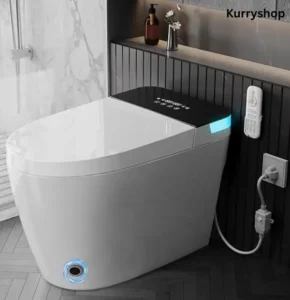
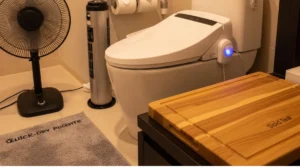
Smart home products can be hit or miss. Some add real value. Others add menus, apps, and frustration. A well-designed smart toilet leans toward the first category. Heated seating, warm water cleaning, automatic flushing — these features aren’t about luxury as much as comfort and consistency. Once you get used to them, standard setups feel oddly outdated.
The key is that everything works quietly in the background. Remote control when you need it, automation when you don’t. No constant adjustments, no learning curve after the first day.
Power and Airflow When You Actually Need It
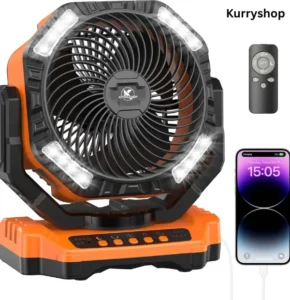
Portable fans are usually simple devices, but a battery-powered model with long runtime changes how and where you use it. Camping trips, power outages, garages, patios — places where airflow matters but outlets aren’t guaranteed. A fan that can run for days on a single charge becomes a reliable tool instead of an occasional convenience.
Remote control and oscillation might sound like extras, but when the fan is mounted or placed across the room, those details stop being luxuries and start being practical.
What most people get wrong about “home upgrades”
Most people think home upgrades are about adding more things. More features. More tech. More design. In reality, the best upgrades do the opposite. They remove friction. They eliminate moments where you hesitate, adapt, or work around a problem.
A good product doesn’t demand attention. It disappears into the routine.
When something quietly works every day without asking anything from you, that’s when it actually improves your living space.
| What people usually do | What actually works better |
|---|---|
| Buy products that look impressive | Choose tools that quietly fit into daily routines |
| Add more features than needed | Solve one specific, repeated problem |
| Rely on phone apps for everything | Use physical tools that work instantly |
| Focus on trends and aesthetics | Prioritize comfort, safety, and ease of use |
| Ignore small daily annoyances | Fix friction points before they add up |
Why These Products Work Well Together
What ties all of these together isn’t their category. It’s their role. They reduce friction in daily life. They don’t demand attention. They quietly improve routines you repeat every single day. That’s especially important in smaller living spaces, where clutter, inconvenience, and discomfort show up faster and feel heavier. When products earn their space by being genuinely useful, the whole home feels easier to live in.