
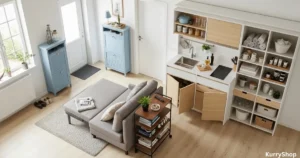
“As an Amazon Associate, I earn from qualifying purchases.”
I didn’t move into a small apartment because I loved minimalism.
I moved because that’s what I could afford at the time, and because it was close enough to work that I could walk home when I was too tired to deal with traffic.
At first, I told myself it would be temporary. A year, maybe two. I’d be careful with what I bought. I wouldn’t let clutter creep in. That was the plan, at least. Reality had other ideas.
Shoes piled up near the door. Bathroom supplies ended up on the floor because there was nowhere else to put them. The kitchen counter slowly disappeared under things I used “almost every day.” And the couch — the only real seating — became a dumping ground for everything that didn’t have a home.
What surprised me wasn’t how fast the space filled up. It was how much mental noise came with it. You don’t notice it right away, but when you’re stepping over stuff just to make coffee, it starts to wear on you. I didn’t want a bigger place. I wanted the same place to feel less like it was pushing back at me.
The mistake I kept making
For a while, I tried to solve the problem the obvious way: buying “storage solutions.” Big shelves. Bulky cabinets. Things that looked great in photos but assumed you had room to spare. I didn’t. Most of the time, the problem wasn’t lack of storage. It was wasted space. Narrow gaps. Vertical areas no one designs for. Furniture that only did one job when it clearly could’ve done two.
That’s when I started paying attention to pieces that didn’t try to dominate the room. Things that fit around real habits instead of forcing new ones. Not everything worked. Some stuff felt flimsy. Some was more annoying than helpful. But a few pieces quietly changed how the apartment functioned day to day.
The slim cart that found a home I didn’t know existed
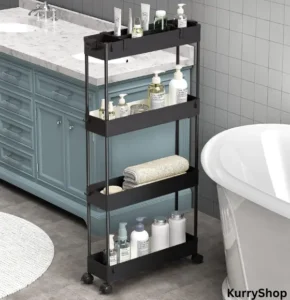
The SPACELEAD Slim Storage Cart was one of those purchases I didn’t expect much from. It was cheap enough that I assumed it would feel cheap. Plastic, narrow, on wheels — my expectations were low. What I didn’t expect was how perfectly it slid into a gap between the washing machine and the wall. A space that had existed the entire time, doing absolutely nothing.
I didn’t reorganize my life around it. I just started putting things there naturally. Extra paper towels. Cleaning sprays. Stuff I reached for weekly but didn’t want under the sink. The best part wasn’t the storage itself. It was the way it rolled out, let me grab what I needed, then disappeared again. No doors to open. No bending down. No visual clutter once it was tucked back in. It didn’t make the apartment look stylish. It made it feel less chaotic. And that mattered more.
Furniture that accepts how you actually live
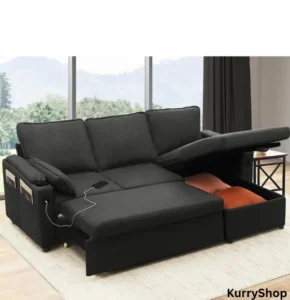
I used to think sofa beds were a compromise. Uncomfortable to sit on, worse to sleep on, and somehow always ugly. The DURASPACE sectional sleeper sofa didn’t completely change my mind about sofa beds, but it did make me rethink what “good enough” actually means.
I don’t host guests every weekend. But when someone does stay over, I don’t want the whole evening to turn into a production. Pulling cushions apart. Dragging out an air mattress. Looking for outlets. This one pulls out without drama. It doesn’t feel luxurious, but it feels intentional. The built-in storage ended up being just as important as the bed itself. Extra blankets live there now. So do random things I don’t need daily but don’t want visible.
The USB ports and cup holders sound gimmicky until you’re actually using them. Late at night. Phone almost dead. Tea within reach. Small details that quietly acknowledge how people really sit on couches. I didn’t buy it to impress anyone.
I bought it so my living room could handle more than one version of life.
Shoes are never as simple as they seem
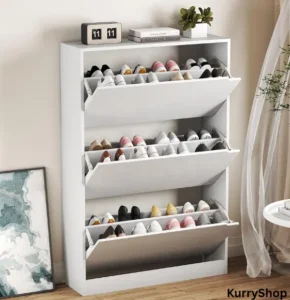
Shoes are deceptive. Individually, they don’t take up much space. Collectively, they become a problem fast. I tried open racks. I tried baskets. I tried telling myself I’d “wear fewer pairs.” None of that worked. The BORNOON shoe cabinet with flip drawers finally made sense of it. Not because it holds an insane number of shoes, but because it hides them vertically without taking up depth.
That detail matters more than it sounds. In an entryway where every inch counts, depth is the enemy. This thing stays slim enough that I don’t feel like I’m squeezing past furniture just to leave the house. The flip drawers slow you down in a good way. You put shoes away properly because it’s easy, not because you’re disciplined. Over time, that changes how the space feels when you walk in. There’s something calming about not being greeted by footwear chaos at the door.
The bathroom problem no one warns you about
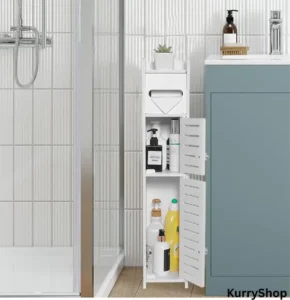
Bathrooms in small apartments are rarely designed for actual humans. There’s usually a sink, a toilet, maybe a mirror — and then you’re expected to figure out the rest. The space above the toilet is one of those areas that exists but is almost never used well. I avoided it for a long time because most over-the-toilet units feel awkward or unstable.
The TuoxinEM over-the-toilet storage cabinet wasn’t perfect, but it was practical. Slim enough not to feel intrusive. Closed doors so everything doesn’t stare back at you while you brush your teeth. Toilet paper, cleaning supplies, extra toiletries — all the boring necessities finally had a place. And once they did, the bathroom stopped feeling like it was constantly one step away from disorder. It didn’t make mornings better. It made them quieter.
When furniture does one job and does it well
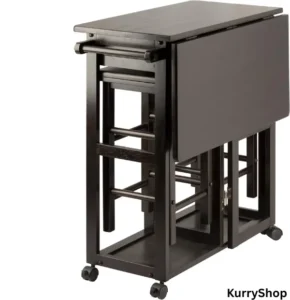
Not everything needs to be multifunctional. Sometimes, the best pieces are the ones that understand their role and stick to it. The Winsome Suzanne space saver set sits in my kitchen area, and I barely think about it anymore. That’s probably the highest compliment I can give.
It holds what it needs to hold. Coffee things. Small appliances. Stuff I use daily but don’t want spread across the counter. The height makes sense. The footprint doesn’t feel aggressive. I didn’t rearrange the kitchen around it. It adapted to the kitchen that already existed. And that’s the difference between furniture that feels like a guest and furniture that feels like it belongs.
| Product | Best Used In | What It Solves | How It Feels Long-Term |
|---|---|---|---|
| SPACELEAD Slim Storage Cart (4-Tier) | Kitchen, bathroom, laundry corners | Turns dead narrow gaps into usable storage | Quietly useful, you stop noticing it — which is a good sign |
| DURASPACE Sleeper Sofa with Storage | Small living rooms, studio apartments | Combines seating, sleeping, and hidden storage | Feels practical more than fancy, but earns its place daily |
| BORNOON Shoe Cabinet (Flip Drawers) | Entryway, hallway | Keeps shoes out of sight without eating floor space | Makes the entrance feel calmer and less cluttered |
| TuoxinEM Over-the-Toilet Cabinet | Small bathrooms | Uses vertical space that’s usually wasted | Feels basic but dependable, especially in tight spaces |
| Winsome Suzanne Space Saver Set | Kitchen or coffee corner | Adds storage without turning the kitchen into a warehouse | Feels like furniture, not temporary storage |
What most people get wrong about small-space furniture
A lot of people assume the goal is to make a small place look bigger. I don’t think that’s realistic, or even necessary. What actually helps is making the space feel less demanding. Furniture that requires constant adjustment, folding, hiding, or managing adds friction. Even if it looks clever, it ends up being another thing you have to think about.
The pieces that worked for me shared a few quiet traits:
- They fit into unused or awkward spaces
- They didn’t require new habits to function
- They reduced visual noise
- They stayed out of the way when not needed
None of them promised transformation. They just made daily movement easier.
Living with less friction
Over time, the apartment didn’t feel bigger. But it felt calmer. I stopped bumping into things. I stopped stacking stuff “temporarily.” I stopped feeling like I had to constantly reset the space. That’s when I realized something important: good storage and furniture don’t announce themselves. They disappear into your routine.
When something works, you forget it’s there. When it doesn’t, it reminds you constantly. I still live in the same small place. Same square footage. Same walls. But the space finally feels like it’s cooperating instead of resisting. And honestly, that’s enough.