
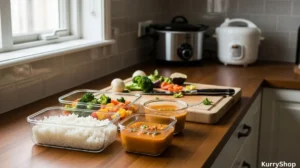
I used to cook every evening with good intentions and a bad sense of time. I’d start chopping onions around seven, thinking it would be quick, and somehow end up eating close to nine, tired, hungry, and annoyed at myself for doing this again. The food was fine. Sometimes even good. But the daily repetition of planning, prepping, cooking, and cleaning slowly turned into friction. Not dramatic burnout. Just that low-grade resistance that makes you order takeout even when you don’t really want it.
Batch cooking and meal prep entered my life not as a lifestyle choice, but as damage control.
At first, I resisted it. It sounded rigid. Like something organized people did with matching containers and color-coded calendars. But the problem wasn’t cooking itself. It was the constant restarting from zero. Technology, surprisingly, was what made the difference—not in a flashy way, but by quietly removing the parts of cooking that were stealing time without adding value.
Cooking isn’t the slow part. Resetting is.
Most people think cooking takes too long because of the actual cooking. The heat, the simmering, the waiting. That’s not really it. What eats time is everything around it. Deciding what to cook. Washing and chopping ingredients again and again. Monitoring multiple steps while trying not to forget something on the stove. Cleaning up right when you’re already tired.
Batch cooking changes the rhythm. Instead of repeating the same setup every day, you do it once, intentionally. But doing that well, without turning your kitchen into a weekend factory line, is where technology quietly steps in.
The slow cooker: boring name, unfair reputation
Slow cookers don’t get much hype anymore. They feel outdated next to shiny new appliances. But for batch cooking, they’re still one of the most practical tools around. What they do well isn’t speed. It’s delegation.
You load ingredients. You leave. Nothing burns. Nothing needs stirring. The food cooks while you live your life. Modern slow cookers improved in small but meaningful ways:
- Timers that switch to “keep warm” instead of overcooking
- Ceramic inserts that clean easily and don’t retain smells
- Larger capacities that actually make batch cooking worthwhile
Compared to cooking the same meal in a pot on the stove, the difference isn’t flavor—it’s attention. The slow cooker doesn’t ask for it. That alone can save hours across a week.
Pressure cookers, especially electric ones, solve a different problem. They’re for people who don’t want to wait, but also don’t want chaos. The appeal isn’t just that they’re fast. It’s that they’re contained. You can cook beans from dry in under an hour. Tough cuts of meat become tender without babysitting. Big batches of soup don’t need constant checking.
What matters for meal prep is consistency. Pressure cookers deliver the same result every time once you learn the basics. Compared to stovetop cooking:
- No evaporation guesswork
- No adjusting heat every few minutes
- No hovering to prevent boil-overs
They’re not better for everything. But when you want to knock out several meals in one session, the predictability adds up.
Rice cookers used to be single-purpose tools. Now they’re quiet multitaskers. Modern versions handle grains, lentils, steamed vegetables, even full one-pot meals. Some have fuzzy logic cooking, which sounds like marketing nonsense until you realize it just means the machine adjusts itself instead of following rigid timers.
For batch cooking, this matters because grains are foundational. Rice, quinoa, farro, barley—they form the base of countless meals. Cooking them manually every few days adds up. Cooking a large batch once, perfectly, with minimal effort, changes how often you reach for them. And unlike pots, rice cookers don’t demand attention or perfect timing.
The tools that matter: Storage, Smart appliances, and planning without the noise
Meal prep fails more often because of storage than cooking. Food that dries out, leaks, or smells weird by day three doesn’t get eaten. It gets ignored, then thrown away. Technology here is boring but essential:
- Airtight containers that actually seal
- Glass that doesn’t absorb flavors
- Stackable designs that don’t collapse your fridge into chaos
Vacuum-sealed containers and bags extend freshness even further, especially for proteins and sauces. You don’t need a commercial setup. Even basic vacuum sealers reduce waste and stretch prep sessions across more meals. Compared to plastic containers that warp and stain, better storage pays for itself in saved food alone.
A lot of kitchen tech is marketed as smart because it connects to Wi-Fi. That part is mostly irrelevant. What matters is automation. Timers that remember settings. Appliances that shut off safely. Programs that handle steps in sequence.
These features don’t make you a better cook. They make cooking less mentally demanding. When you’re batch cooking, cognitive load matters. Managing four dishes at once is easier when two of them don’t need you. That’s where tech earns its place.
Apps promise to solve meal prep by organizing recipes and generating shopping lists. Some people love them. Others abandon them quickly. The difference usually comes down to flexibility. Apps work best when they reduce decisions, not add rules. If you have to follow a rigid plan, it becomes another chore. The most useful features tend to be simple:
- Saving a small rotation of repeat meals
- Scaling recipes automatically for batch sizes
- Generating ingredient lists without micromanaging
When apps try to optimize nutrition, macros, or variety too aggressively, they often backfire. Real life is messier than software. Used lightly, though, they can shorten the “what should I cook?” phase dramatically.
Batch cooking vs. daily cooking: a realistic comparison
Cooking daily feels fresh and flexible. Batch cooking feels efficient and controlled. In practice, daily cooking often means:
- Repeating prep tasks
- Making smaller portions out of convenience
- Spending more time overall, even if each session feels short
Batch cooking shifts effort upfront. One longer session replaces several shorter ones. The trade-off isn’t taste. It’s spontaneity. But technology softens that trade-off. When food stores well and reheats properly, meals don’t feel repetitive. They feel ready. And ready is underrated.
| Kitchen Tool | What It Replaces | Why It Saves Time | Weekly Time Impact |
|---|---|---|---|
| Slow Cooker | Daily stovetop meals that need watching | Cooks unattended, no stirring or timing stress | ~3–4 hours saved |
| Electric Pressure Cooker | Long boiling and slow braising | Faster cooking with consistent results | ~2–3 hours saved |
| Rice Cooker | Repeated grain cooking on the stove | Handles grains automatically without monitoring | ~1–2 hours saved |
| Quality Storage Containers | Re-cooking spoiled or dried-out food | Keeps meals fresh longer and reduces waste | Indirect but significant |
“Seeing it laid out like this makes it clearer why batch cooking feels easier once the setup is done.”
Microwaves get blamed for bad leftovers, but the issue is usually moisture and container choice. Modern microwaves with inverter technology heat more evenly. Steam functions revive grains and vegetables instead of drying them out.
Combined with proper storage, reheated meals can taste close to fresh. Not identical, but good enough that you don’t resent them. That matters psychologically. If reheated food feels like punishment, meal prep won’t last.
Not all kitchen tech is big. Some of the biggest time-savers are modest tools:
- Digital scales for portioning batches evenly
- Food processors for chopping large volumes quickly
- Immersion blenders that skip transferring hot liquids
These don’t change what you cook. They change how long it takes. Used occasionally, they seem unnecessary. Used consistently, they shave minutes off every step. Minutes add up.
Why batch cooking feels easier with tech
Without technology, batch cooking can feel overwhelming. Too many pots. Too much timing. Too much cleanup. Technology absorbs complexity. It holds temperature. It manages timing. It standardizes outcomes.
This doesn’t make cooking impersonal. It makes it sustainable. The goal isn’t to eliminate cooking. It’s to stop it from taking over your evenings.
Using kitchen tech well takes practice. There’s a learning curve. Mistakes happen. But once you repeat a few core meals and processes, something shifts. You stop thinking about the tools and start trusting them. That trust is part of expertise. It’s not about knowing every feature. It’s about knowing which ones matter for how you cook.
When batch cooking actually saves time (and when it doesn’t)
Batch cooking saves time when:
- You eat similar foods across the week
- You don’t mind leftovers
- You have limited weekday cooking time
It doesn’t help much if:
- Your schedule changes constantly
- You crave novelty every meal
- You dislike reheated food
Technology can’t fix preference. But it can support habits that already make sense for your life. The biggest time-saving benefit of batch cooking isn’t on the clock. It’s in your head. Fewer decisions. Less last-minute scrambling. Less frustration at 7 p.m. Technology doesn’t just speed things up. It removes friction. And friction is what makes cooking feel exhausting.
I still cook most days. But now it’s by choice, not obligation. Some nights I reheat something I made days ago and feel grateful instead of bored. Other nights I cook fresh because I want to, not because I have to. Batch cooking didn’t turn my kitchen into a system. Technology didn’t turn me into a productivity machine. They just gave me back my evenings.