
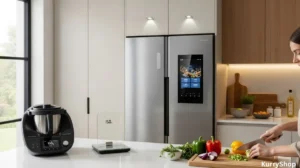
I never considered myself someone who needed a “smart kitchen.” My kitchen had a basic stovetop, a fridge that hummed along quietly, and a blender that did its job without fanfare. I was skeptical about smart appliances and kitchen gadgets promising efficiency, perfectly timed meals, or automated shopping lists. It all seemed a little excessive. But when I started cooking more deliberately—and more often—these small technologies began to fit seamlessly into the way I actually cook, rather than asking me to change my habits to suit them.
My day starts with coffee. Nothing fancy, just a French press and freshly ground beans. I got a smart plug for the kettle because I realized I was rushing through mornings, often forgetting to start boiling water until the last minute. The plug is simple: I set a schedule on my phone. Some mornings, I adjust it manually when I wake up later than planned.
What I didn’t expect was how small adjustments felt more intuitive than I thought. The kettle doesn’t wake me up; it simply makes the action of boiling water predictable. There’s no voice assistant scolding me for being late. No flashing lights. Just a subtle nudge that frees my attention for the things I actually care about: pouring beans into the press, watching the water bloom, smelling the aroma fill the kitchen. That little timer is invisible most of the day, but when it’s there, it quietly makes mornings smoother.
Practical Kitchen Tech That Feels Invisible but Makes Cooking Easier
A “smart fridge” isn’t about giant screens showing ads or Instagram feeds. Mine has a temperature sensor and an app that notes if the door is left open. At first, I thought this was a gimmick. But one hot day in July, I was distracted by a call and left the fridge door open for twenty minutes. The app pinged me with a small alert on my phone.
It wasn’t revolutionary. It wasn’t flashy. It was practical. I didn’t have to check the fridge constantly, and I avoided spoiling a batch of homemade yogurt. That’s the kind of technology that doesn’t ask me to change how I cook; it just respects the natural flow of life in the kitchen.
I’ll admit: I was resistant to pressure cookers and slow cookers for years. They sounded robotic, impersonal, and almost lazy. When I finally tried a multi-cooker with smart controls, I realized it didn’t replace cooking—it enhanced it.
- Timing flexibility: I can set a cooking schedule for beans or rice that will be ready when I need it. The timing isn’t rigid; I adjust it mid-cook if I notice something unusual.
- Temperature accuracy: The app tells me when the temperature is off, but it doesn’t dictate my next step. I still check, stir, or add ingredients manually.
- Safety notifications: It nudges me when the lid isn’t secured properly, which keeps me from walking away and forgetting a pressurized pot on the counter.
It’s subtle guidance, not commands. The multi-cooker doesn’t cook the meal for me; it provides a gentle layer of security and consistency, allowing me to focus on flavor, timing, and my own instincts.
I never expected to rely on smart scales, but once I tried one for baking, it changed how I approach recipes without feeling prescriptive. The scale connects to an app that suggests ingredient ratios, but I often ignore the suggestion and follow my gut. The real value isn’t in the app telling me what to do—it’s in the subtle feedback: “You’ve added slightly more flour; maybe add a tiny bit more water.” It mirrors how I think, not how the app thinks I should cook.
Likewise, knife sets with weight-balanced handles or magnetic guides feel like thoughtful engineering rather than high-tech gimmicks. They don’t beep or flash. They don’t judge my chopping speed. They just align with the natural motion of cooking, so my hands and mind feel less strained over hours of preparation.
Most “smart kitchen” demonstrations I’ve seen online focus on voice commands: “Alexa, start the oven” or “Hey Google, preheat to 350.” I experimented with voice control, but I realized I don’t always want to talk to appliances while cooking. Sometimes my hands are messy, sometimes I’m too focused on a sauce that could boil over.
I gravitated toward triggers instead of commands. Here’s what that means in practice:
- My oven can detect if a probe thermometer is inserted into meat and adjust its internal settings without me saying a word.
- The extractor fan near the stove turns on when it senses steam.
- Lights near the counter brighten when motion is detected and fade when I step away.
These features don’t demand attention; they respond to it. It feels natural because it aligns with what I’m already doing rather than requiring me to speak, tap, or check a screen constantly.
What Most People Get Wrong About Kitchen Automation
There’s a common misconception that smart kitchens are about laziness or replacement of skill. In reality, the value is covert support, not substitution. People often buy flashy appliances thinking they’ll “cook for them,” only to find themselves juggling apps, notifications, and firmware updates. That defeats the purpose entirely.
A kitchen that respects your habits works quietly. It notices patterns—without asking permission for every step. It reduces repetitive small mistakes, like leaving the oven on or forgetting to preheat, and it does so in a way that feels human-centered, not tech-centered.
Comparing Approaches: Big Brand Cloud vs Local Solutions
To put it bluntly:
- Cloud-based systems (Amazon Alexa, Tuya, etc.) shine when convenience and remote access are priorities. You can start cooking from the office or monitor your fridge from another state. But when the internet lags or goes down, most automations fail completely.
- Local systems (Home Assistant, Hubitat) prioritize reliability over flashiness. You can trigger lights, ovens, and sensors even if Wi-Fi disappears. It’s less about remote bragging rights and more about day-to-day resilience.
I prefer a hybrid approach. Cloud access is handy for shopping reminders or notifications, but I want the kitchen to work independently during the hours that matter most: actual cooking.
Daily Observations That Don’t Make Headlines
Cooking with subtle tech changes how small, almost invisible routines work:
- My timer doesn’t beep; it glows softly. I glance at it, adjust if necessary.
- Smart lighting transitions from bright to warm as the evening progresses. I barely notice it consciously, but my eyes and mood benefit.
- Appliances that sense temperature or motion reduce micro-decisions I didn’t realize were draining my attention.
These aren’t exciting features in commercials, but they transform the daily experience. The kitchen doesn’t demand me to interact with it constantly; it blends into the flow of life.
| Feature | What It Does | Why It Feels Natural |
|---|---|---|
| Refrigerator Sensors | Alerts you if the door is left open or temperature changes | Keeps your food safe without requiring constant attention |
| Multi-Cooker | Adjusts cooking temperature automatically, schedules meals | Enhances hands-on cooking without taking control away from you |
| Smart Scale | Measures ingredients precisely and gives subtle feedback | Supports your intuition while baking or cooking |
| Motion-Sensing Lights | Adjusts brightness based on activity and time of day | Illuminates naturally without interrupting cooking flow |
| Smart Thermometer | Notifies when food reaches the right temperature | Helps prevent mistakes while keeping your hands free |
Sensory Benefits Beyond Efficiency
Interestingly, the most memorable changes aren’t in speed or saved minutes—they’re in the feeling of the kitchen. A steady, predictable oven temperature ensures browning happens naturally. Lights that adjust with motion remove sudden harsh shadows that make chopping onions feel awkward. Appliances that quietly signal readiness or errors reduce that low-grade anxiety you didn’t know was always present.
These small sensory details compound over days and weeks, turning routine cooking into something smoother and more pleasurable. The kitchen becomes a companion rather than a checklist.
Everyday Tech Lessons I Learned
- Small wins are everything: A kettle that starts automatically or a fan that detects steam may seem minor, but these small improvements reduce mental load.
- Control, don’t command: Gadgets that follow my cooking patterns feel natural; gadgets that expect me to adapt to them feel annoying.
- Redundancy is key: Even a smart thermometer fails sometimes. I keep an analog backup. Tech is support, not a replacement.
- Subtlety matters: Avoid flashy lights or constant notifications. Technology works best when it’s almost invisible until needed.
- Integration > novelty: One well-integrated system beats a dozen half-functioning toys. The rhythm of my kitchen dictates what I need, not the other way around.
Thoughts on the Future of Smart Kitchens
I don’t need my fridge to tell me the weather or my oven to post selfies on Instagram. I want tech that aligns with my habits, that anticipates without overwhelming, that quietly reduces friction without telling me I’m doing it wrong.
The next generation of kitchen automation will probably focus less on flashy dashboards and more on context-aware, adaptive responses: a mixer that knows your flour-to-water ratio by feel, a vent that senses aromatic compounds, lights that respond to natural circadian rhythms. These are small, subtle, human-centered improvements that will make a kitchen feel alive without ever needing a “checklist mode.”
Why I Keep Using Technology in the Kitchen
At this point, I can’t imagine giving up the small, thoughtful tech I’ve added over the years. Not because it’s flashy or brag-worthy, but because it respects how I cook. It doesn’t demand I adapt to it. It watches, listens, and nudges gently. That’s why I call my kitchen “smart,” but in the best possible sense. It’s smart for me, not for anyone else.