
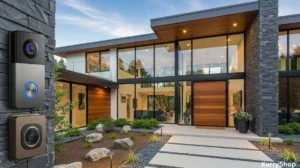
I didn’t answer my front door, even though I was home, felt oddly empowering. I was sitting at the kitchen table, halfway through a late lunch, when the doorbell rang. That sharp, familiar sound that usually triggers a tiny spike of urgency. For years, my response had been automatic: stand up, walk over, open the door, then figure out who it was and what they wanted. Sometimes it was fine. Sometimes it was awkward. Sometimes it was a salesperson catching me at the worst possible moment.
That day, though, I glanced at my phone first. A delivery driver, already turning back toward his truck. I let the door stay closed, finished my sandwich, and picked up the package a minute later. Nothing dramatic happened. No danger avoided. No confrontation escaped. Just a small shift in how the moment played out. And once I noticed that shift, I couldn’t stop noticing how often it happened. That’s when it clicked: video doorbells don’t really change who’s at your door. They change how you decide to engage.
For most of us, the front door has always been reactive. Something happens outside, and you respond inside. A knock. A bell. A voice muffled through wood and glass. You don’t get context. You get interruption. That interruption used to feel normal because there wasn’t another option. You either answered or you didn’t, and not answering always carried a faint sense of guilt. What if it’s important? What if it’s rude?
A video doorbell adds context before commitment. It gives you a few seconds of information before you decide what the moment deserves. Those seconds matter more than they sound. They turn the door from a demand into a choice.
There’s a psychological difference between reacting and choosing, even if the outcome is the same. Opening the door because you know who’s there feels calmer than opening it to find out. With a video feed, your body doesn’t tense up in the same way. You’re not bracing for the unknown. You’re already oriented.
Over time, that changes how you feel about interruptions in general. The doorbell becomes informational rather than intrusive. A signal, not a command. You start to notice how often you were previously responding out of habit, not intention.
How the tech fades into the background
On paper, video doorbells sound like obvious gadgets. Cameras. Motion sensors. Wi-Fi. Apps. All very techy. In daily life, the good ones don’t feel like technology at all. They feel like an extra sense that quietly turns on when needed.
Resolution is a good example. A 1080p or 4K camera isn’t impressive because it’s sharp. It’s impressive because you don’t argue with what you’re seeing. You don’t wonder if that’s a neighbor or a stranger. You don’t zoom in and still feel unsure. Clarity removes hesitation.
Field of view matters in the same quiet way. A narrow angle forces you to guess what’s just out of frame. A wider view lets you see body language, movement, whether someone’s alone or not. It’s not about surveillance. It’s about context. Even audio features play out differently than expected. Two-way talk isn’t something most people use constantly. What it changes is the option. Knowing you could speak without opening the door already shifts the dynamic.
When friends ask what to look for in a video doorbell, I don’t start with brand names. I think about moments.
- How fast the video loads: If there’s a delay, the moment is already gone. Speed feels like confidence.
- Motion detection that understands people: Being notified when someone approaches feels useful. Being notified every time a leaf moves feels exhausting.
- Night footage that doesn’t feel like guesswork: Not cinematic. Just readable.
- Notifications that match real life: A package alert during the day, not ten random pings while you’re asleep.
- An app that opens to the right thing: You tap, you see the event. No digging.
These aren’t specs you brag about. They’re the reasons you stop thinking about the device once it’s installed. The biggest change isn’t technical. It’s behavioral. You don’t rush. You don’t feel obligated. You don’t feel cornered.
Sometimes you answer faster because you already know it’s someone you want to see. Sometimes you don’t answer at all, and it doesn’t feel like avoidance. It feels like prioritization. That’s subtle, but it adds up. The door stops being a social pressure point. It becomes another channel of information.
What most people get wrong about video doorbells
A lot of people think video doorbells are about catching bad behavior. Theft. Trespassing. Suspicious activity. That happens, sure. But it’s not the main value. The real value is removing ambiguity. Most interactions at the door aren’t dangerous. They’re just inconvenient. Deliveries, sales pitches, wrong addresses, neighbors stopping by at bad times.
Without context, every ring demands attention. With context, most of them resolve themselves. Another misconception is that you’ll constantly watch footage. In reality, you want the opposite. You want to glance, understand, and move on. Systems that encourage endless reviewing miss the point. There’s also the idea that more alerts equal more safety. They don’t. They equal more noise. Awareness comes from relevance, not volume.
Apple vs Amazon, in everyday use
Apple and Amazon approach video doorbells from noticeably different angles. Apple’s ecosystem tends to feel reserved. HomeKit Secure Video processes footage locally when possible, and privacy controls are front and center. The experience feels designed to stay out of your way. Using Apple-compatible doorbells often feels quiet. Notifications are restrained. Features are fewer, but intentional. If you’re already in the Apple world, it feels cohesive, almost invisible.
Amazon’s Ring ecosystem feels more expansive. Integration is broad. Features roll out quickly. There’s a strong emphasis on community alerts and cloud-based storage. Living with Ring can feel more active. More data, more settings, more visibility into what’s happening around your neighborhood. For some people, that’s reassuring. For others, it’s more than they want to think about. Neither approach is inherently better. One prioritizes restraint and privacy. The other prioritizes reach and flexibility. The right choice depends on how much involvement you want from your door.
There’s a specific moment many people notice after installing a video doorbell. The day they hear the bell and don’t immediately stand up. Instead, they check their phone. Or their watch. Or a screen on the wall. That pause is new. It’s not laziness. It’s assessment. You’re still engaged. You’re just engaged on your terms.
Motion alerts are where many devices succeed or fail. If alerts are constant, they become background noise. If they’re rare but relevant, they earn attention. The best doorbells learn patterns. Or at least let you set boundaries that match reality. Street-facing homes need different sensitivity than quiet cul-de-sacs. A busy sidewalk isn’t a threat; it’s just movement. When alerts respect your environment, you stop resenting them. You stop disabling them. You trust that when one shows up, it’s worth a look.
Video doorbells subtly change how people behave around your home. Delivery drivers linger less. Salespeople adjust their approach. Neighbors wave at the camera without thinking about it. It’s not intimidation. It’s awareness on both sides. At the same time, responsible use matters. Pointing cameras thoughtfully. Avoiding unnecessary coverage. Understanding that awareness shouldn’t turn into surveillance. Most people find that balance naturally, but it’s part of the lived experience.
When things don’t work perfectly
No device is flawless. Wi-Fi drops. Apps lag. Firmware updates introduce quirks. What matters is how often these failures interrupt real moments. A doorbell that misses an occasional event is frustrating. One that constantly misfires is worse.
Graceful failure looks like clear offline notifications, local backups, and quick recovery. You don’t need perfection. You need reliability most of the time. When reliability is there, small issues feel manageable instead of maddening.
Why this small upgrade feels bigger than it is
A video doorbell doesn’t change your house. It changes how you interact with it. You feel less reactive. Less rushed. Less obligated to respond instantly to external demands. That spills over into other parts of life. You notice interruptions more clearly. You decide which ones deserve attention. The door becomes just another interface. One you control. Despite the marketing, most people don’t buy video doorbells because they’re afraid. They buy them because they’re tired of uncertainty.
They want to know who’s there before engaging. They want to avoid awkward moments. They want clarity. Fear fades quickly. Awareness stays. Once you get used to knowing what’s happening at your door, going back feels strange. Not unsafe. Just incomplete. You hear the bell, check the screen, and make a decision. Sometimes you open the door. Sometimes you don’t. Either way, it feels intentional. And eventually, that’s all the upgrade really does: it gives you back control over a momen t that used to control you.
My cousin Sarah lives in a quiet part of Phoenix. Nothing dramatic ever happens there. That’s kind of the point. She installed a video doorbell mostly because it was on sale and the old bell barely worked. No big expectations. First few days, it just showed delivery drivers, neighbors walking dogs, the usual desert afternoon stuff. Then one night, around 9:30, someone rang the bell.
She was already in pajamas. Normally she would’ve sighed, thrown on a hoodie, and opened the door halfway, nervous but pretending not to be. This time, she checked her phone first.
It was a guy holding a clipboard, standing a little too close to the door. Not dangerous-looking. Just… off. She spoke through the app instead. Asked what he needed. He stepped back, explained, and left pretty quickly. Nothing bad happened. That’s the thing.
The next morning she told me, “I didn’t feel brave. I just felt informed.”
And somehow that felt better.
Now she still opens the door for friends, neighbors, people she recognizes. But she never opens it out of pressure anymore. The doorbell didn’t make her paranoid. It just gave her a pause. A second to decide.
It’s a small upgrade. But it quietly changes who’s in control of the moment.